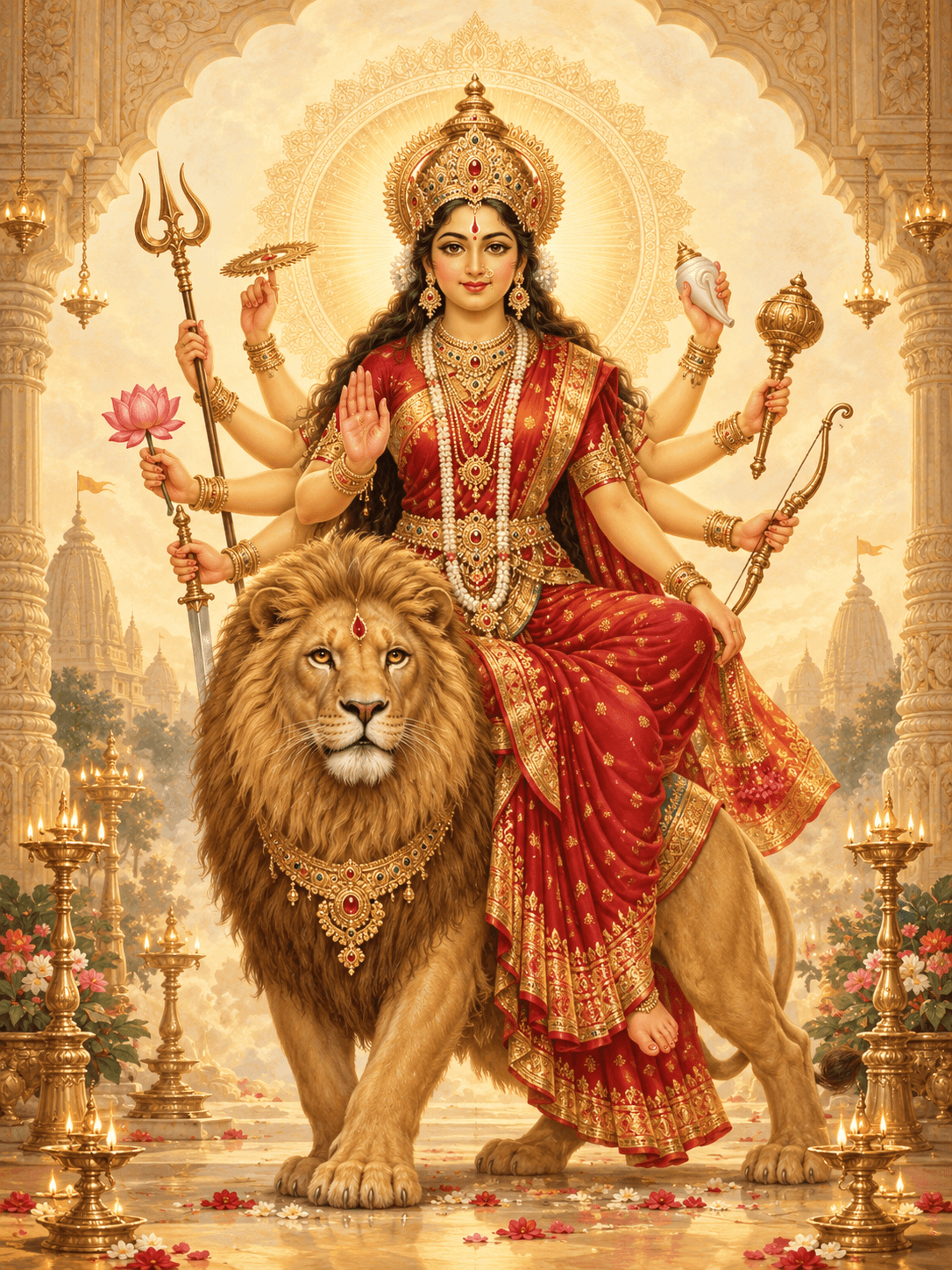
Mantra Chanting
1. A Simple Durga Mantra
A short salutation to Maa Durga.
Sanskrit
ॐ दुर्गायै नमः॥
Pronunciation
Om Durgaayai Namah.
Reading guide: Om · Dur-gaa-yai · Na-mah
Meaning
“Om. Salutations to Goddess Durga.”
How to Begin
Read the words slowly, then repeat the prayer in a gentle voice. Keep your breathing natural.
You can begin with a few repetitions while keeping the meaning in mind.
Reflection: “What can I approach with greater courage today?”
2. Sarva Mangala Mangalye
A prayer honouring the Goddess as auspicious, compassionate and a source of refuge.
Sanskrit
सर्वमङ्गलमाङ्गल्ये शिवे सर्वार्थसाधिके। शरण्ये त्र्यम्बके गौरि नारायणि नमोऽस्तु ते॥
Pronunciation
Sarva Mangala Maangalye Shive Sarvaartha Saadhike. Sharanye Tryambake Gauri Naaraayani Namostu Te.
Meaning
“O auspicious one among all that is auspicious, benevolent one who accomplishes all purposes; refuge of all, three-eyed Gauri, Narayani—I bow to you.”
How to Begin
Learn one phrase at a time before joining the two lines. Give yourself time with longer words such as Sarvaartha Saadhike.
You can read the prayer once attentively at the beginning or end of your devotional practice.
Reflection: “How can I bring care and good intention to what I am beginning?”
3. Jayanti Mangala Kali
This verse offers salutations to the Goddess through a series of sacred names.
Sanskrit
जयन्ती मङ्गला काली भद्रकाली कपालिनी। दुर्गा क्षमा शिवा धात्री स्वाहा स्वधा नमोऽस्तु ते॥
Pronunciation
Jayantee Mangalaa Kaalee Bhadrakaalee Kapaalinee. Durgaa Kshamaa Shivaa Dhaatree Svaahaa Svadhaa Namostu Te.
Meaning
“Salutations to you, Goddess known as Jayanti, Mangala, Kali, Bhadrakali, Kapalini, Durga, Kshama, Shiva, Dhatri, Svaha and Svadha.”
The prayer brings together names associated with the Goddess’s different qualities and forms.
How to Begin
Practise the names in small groups, then recite the full verse. Pay attention to Kshamaa and Svadhaa, which may take time to pronounce comfortably.
Reflection: “How can I express strength without losing kindness?”
Which Durga Prayer Should You Choose?
| Your preference | Suggested starting point |
|---|---|
| A short salutation | Om Durgaayai Namah |
| A prayer of reverence and refuge | Sarva Mangala Mangalye |
| A verse remembering the Goddess through her names | Jayanti Mangala Kali |
Begin with one prayer. If you follow a family tradition or have received instructions from a spiritual teacher, let that guide your practice.
How to Begin Durga Mantra Chanting
1. Choose a Comfortable Time
Set aside a few minutes when you can give the prayer your attention.
2. Prepare a Quiet Space
Sit comfortably in a place where you are unlikely to be interrupted. An image of Maa Durga may help you focus if it is part of your practice.
3. Read the Meaning
Understand the prayer before beginning your repetitions.
4. Start Small
For an informal routine, you might choose 11 repetitions of the short mantra or one reading of a longer verse. These are optional starting points, rather than universal ritual requirements.
5. Chant Without Rushing
Keep your voice relaxed and breathe naturally. Pause whenever you need to.
6. Close with an Intention
Sit quietly for a moment, then choose one action that reflects your prayer.
For formal japa, a prescribed vow or an extended ritual practice, follow a qualified teacher’s instructions.
Bringing Devotion into Everyday Life
Courage to Begin
Break a difficult task into smaller steps. Complete the first step with attention.
Compassion in Your Words
Before responding to someone, consider whether your words are clear, necessary and considerate.
Strength to Set Boundaries
Express your needs respectfully and make room for responsibilities you can realistically manage.
Patience with Learning
Allow yourself to be a beginner. Return to the practice without judging every mistake.
Willingness to Help
Offer time, attention or practical support within your means.
These reflections are ways to connect prayer with daily life. They are not conditions for receiving blessings.
Understanding the Benefits of Chanting
A regular devotional practice offers time to pause, remember your faith and renew your intentions.
Some people find familiar prayer personally comforting or helpful in maintaining a reflective routine. Experiences vary, and there is no fixed timetable for a particular result.
Chanting does not guarantee success, physical protection or the disappearance of difficulties. Let your spiritual practice accompany thoughtful action.
Guidance for Your Remedy Journey
Understand Your Practice and How to Follow It
If your Vedic Report includes a mantra recommendation, we help you understand the instructions and how to include the practice in daily life.
For questions about your birth chart, our reports and Ask a Question service provide focused written guidance, explanations and practical remedies.
Clear written answers • Practical remedies • Support beyond delivery
Frequently Asked Questions
Which Durga mantra is suitable for beginners?
“Om Durgaayai Namah” is a short salutation that can be easier to learn. Read its meaning and begin slowly.
What does “Sarva Mangala Mangalye” express?
It praises the Goddess as auspicious and offers reverence to her as a source of refuge.
Should I chant all three prayers?
You can begin with one. Learn it comfortably before adding another prayer.
How many repetitions are necessary?
For informal personal prayer, choose a manageable count. Formal practices may prescribe specific counts and disciplines.
Can I read while chanting?
Yes. Reading the words can help while you are learning. Memorisation can develop gradually.
What if my pronunciation is imperfect?
Pause and practise the difficult word slowly. Roman spelling is only an approximate guide; a knowledgeable teacher can help with Sanskrit sounds.
Do I need flowers, incense or a mala?
These may be part of your tradition, but you can keep a simple personal prayer modest. Follow appropriate guidance for formal puja.
Can I use these prayers during Navratri?
You can include them in your personal devotional reading. If you are following a specific Navratri observance, use the sequence and instructions of that tradition.
What happens if I miss a day?
For an informal routine, resume when you can. If you have undertaken a formal vow, ask your teacher how to handle an interruption.
Does chanting guarantee that my problems will end?
No specific outcome can be guaranteed. Prayer can remain meaningful while you take practical steps to address your circumstances.
Do I need to purchase a report before beginning?
No. Reading these prayers and beginning a simple devotional practice does not require purchasing a report.
Can Vedic Report explain a mantra recommended in my report?
Yes. We can clarify the recommended remedy and how to follow it in everyday life. Formal initiation and detailed ritual instruction should come from a qualified spiritual teacher.
Begin with devotion. Grow in understanding. Let courage and compassion guide your actions.
Vedic Report Editorial
Sanskrit wording and pronunciation may vary across traditions. English meanings are explanatory renderings, and Roman spellings are pronunciation aids.